Screen printing has been the standard method for large print runs for decades, while DTF (Direct-to-Film) has quickly established itself for small and frequently changing orders. The short answer to the question “What pays off when?”: the smaller the run, the more colours involved, and the more often the design changes, the more everything speaks in favour of DTF. The larger the run of the same design with few colours, the more screen printing retains its advantage. This article explains why – and why many businesses today use both methods side by side.
How the methods differ
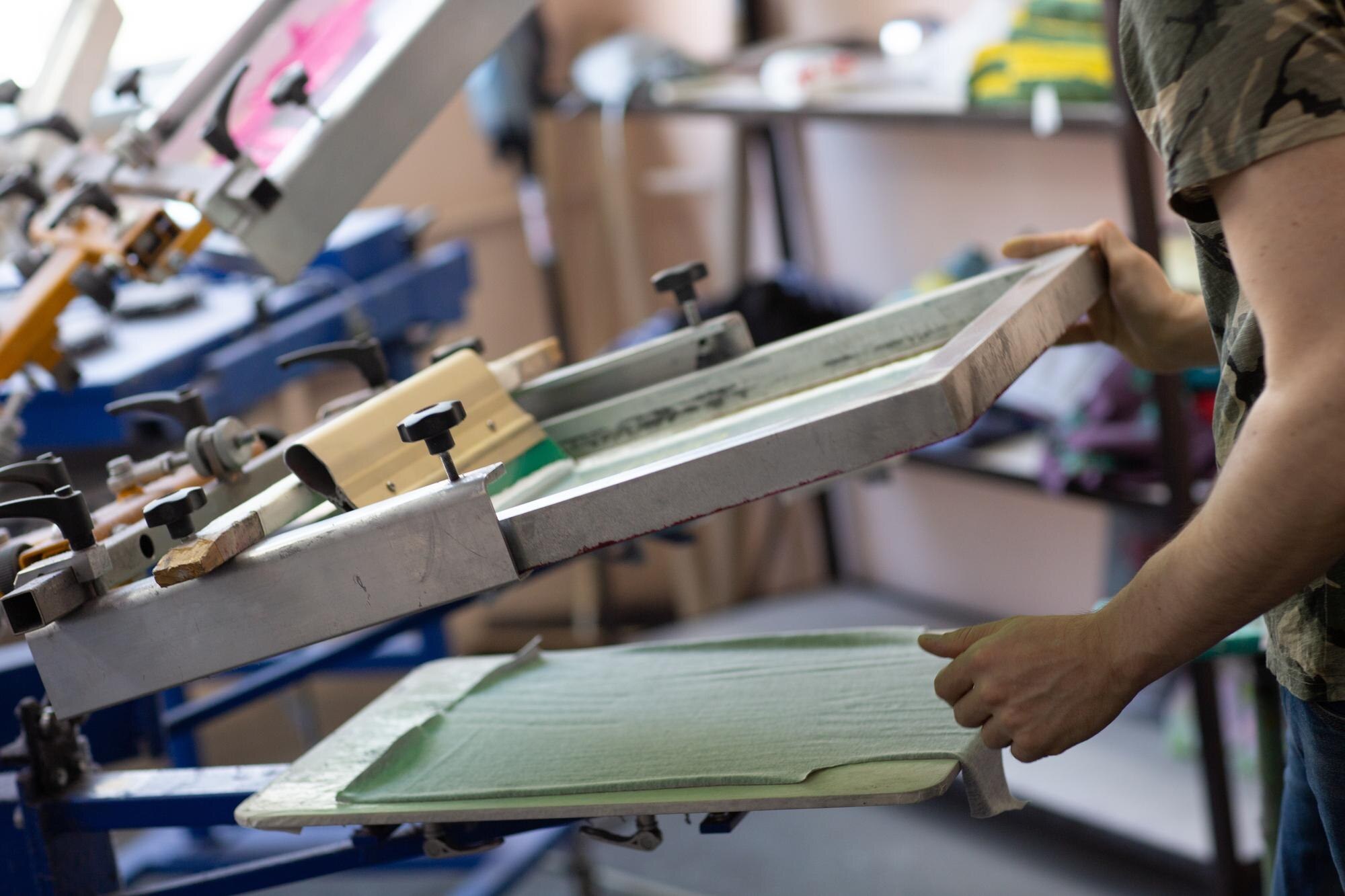
With screen printing, a separate screen is exposed and set up for each colour in the design. The ink is then printed directly onto the textile through the screen. The effort occurs before the first print: films, screens, setup and proofing. Once the machine is running, every additional piece is produced quickly and cheaply.
With DTF printing, there is no such preliminary stage. The design is digitally printed onto a transfer film, coated with hotmelt powder, cured, and transferred onto the textile using a transfer press. The effort per piece is always roughly the same – regardless of whether one piece or a hundred pieces are produced, and regardless of how many colours the design has.
Key differences at a glance
| Screen Printing | DTF | |
|---|---|---|
| Setup effort | high: one screen per colour | practically none |
| Cost per piece | drops significantly with run size | stays roughly the same |
| Number of colours | each colour requires another screen | unlimited, including photos and gradients |
| Design changes, personalisation | time-consuming | with very little extra effort |
| Placement | determined by the machine | flexible, including hard-to-reach areas |
| Production for stock | finished textiles | transfers can be stored and pressed on later |
| Repeat orders | screens must be stored or recreated | simply reprint the file |
Where DTF has the advantage
- Small to medium runs: Without screens, there are no fixed costs that, with screen printing, only pay off over higher quantities.
- Multi-coloured designs: Photos, gradients and fine details cost no more than a single-colour logo.
- Personalisation: Names, numbers or changing designs within a single order are possible without retooling.
- Many materials with one process: DTF is suitable for cotton, polyester and blended fabrics, and with the right hotmelt also for nylon and softshell.
- On-demand production: Transfers can be pre-produced and pressed on only once an order comes in. This reduces stock levels and overproduction.
Where screen printing retains its advantage
- Large runs of the same design: Once the screens are set up, screen printing is hard to beat on a per-piece basis.
- Special colours and effects: Precisely mixed house colours, metallic, glow-in-the-dark or raised effects are a classic strength of screen printing.
- Hand feel on large areas: A DTF transfer sits as a thin layer on the fabric. For very large, full-coverage designs, screen printing can feel softer and more breathable, depending on the ink system used. For small and medium-sized designs, the difference is barely noticeable in practice.
From what run size does which method pay off?
There is no fixed quantity that applies to every business. The point at which screen printing becomes cheaper depends on several factors:
- Number of colours: Every additional colour shifts the threshold in favour of DTF.
- Size of the design: With DTF, film, ink and powder consumption increase with the printed area.
- Repeat orders: If a design is regularly reordered in small quantities, screen printing incurs setup effort every time.
- Capacity utilisation and staffing: A set-up screen printing line only pays off if it is kept running.
As a rough guideline, the industry often cites figures in the range of roughly 50 to 100 pieces per design, above which screen printing becomes cheaper for designs with few colours. These are experience-based values, not fixed thresholds: for multi-coloured designs the break-even point lies considerably higher, while for single-colour designs it can be lower.
Anyone wanting an exact answer should calculate with their own figures: setup costs and cost per piece for screen printing versus cost per transfer for DTF, each based on the business’s typical order sizes.
In practice: combining both methods
For many textile finishers, the answer isn’t “either/or”. Screen printing handles the large, plannable runs. DTF covers everything that doesn’t pay off there: samples and proofs, small batches, reorders, personalised pieces and designs with many colours. This makes it possible to accept orders that previously had to be declined or outsourced.
Frequently asked questions
Do both methods work on dark textiles?
Yes. With screen printing, a white underbase is usually printed first, which requires an additional screen. With DTF printing, the white layer is part of every transfer – light and dark textiles are processed in the same way.
How durable are DTF transfers compared to screen printing?
Both methods deliver wash-resistant results when processed correctly. With DTF, the right combination of film, powder, temperature, time and pressing pressure is essential. A wash test before the full run and care instructions for the end customer are advisable in both cases.
Can DTF fully replace screen printing?
For businesses with predominantly small, frequently changing orders, DTF can serve as the main method. Those who regularly produce large runs of the same design, or special colours and effects, are better served by combining both methods.
DTF systems from RICOH
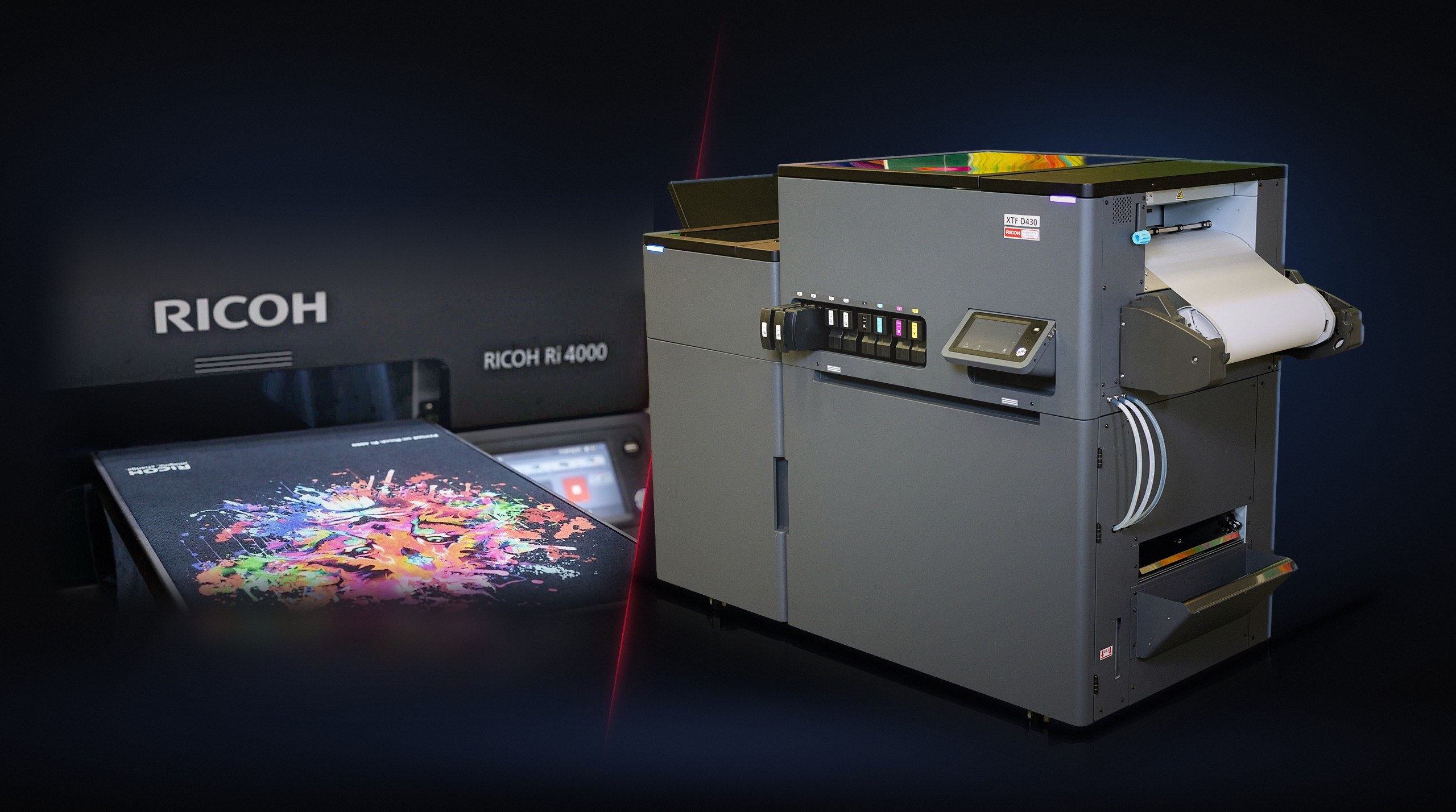
The compact RICOH XTF D430 "DTF Cube" is designed for getting started and for smaller volumes. For industrial production, the RICOH Pro™ D1600 combines printing, automatic powder application and curing in a single system. You can find an overview at DTF Solutions.
Would you like to know how DTF fits into your production? At the RICOH Textile Competence Center you can test the systems with your own designs and materials – get in touch with us.